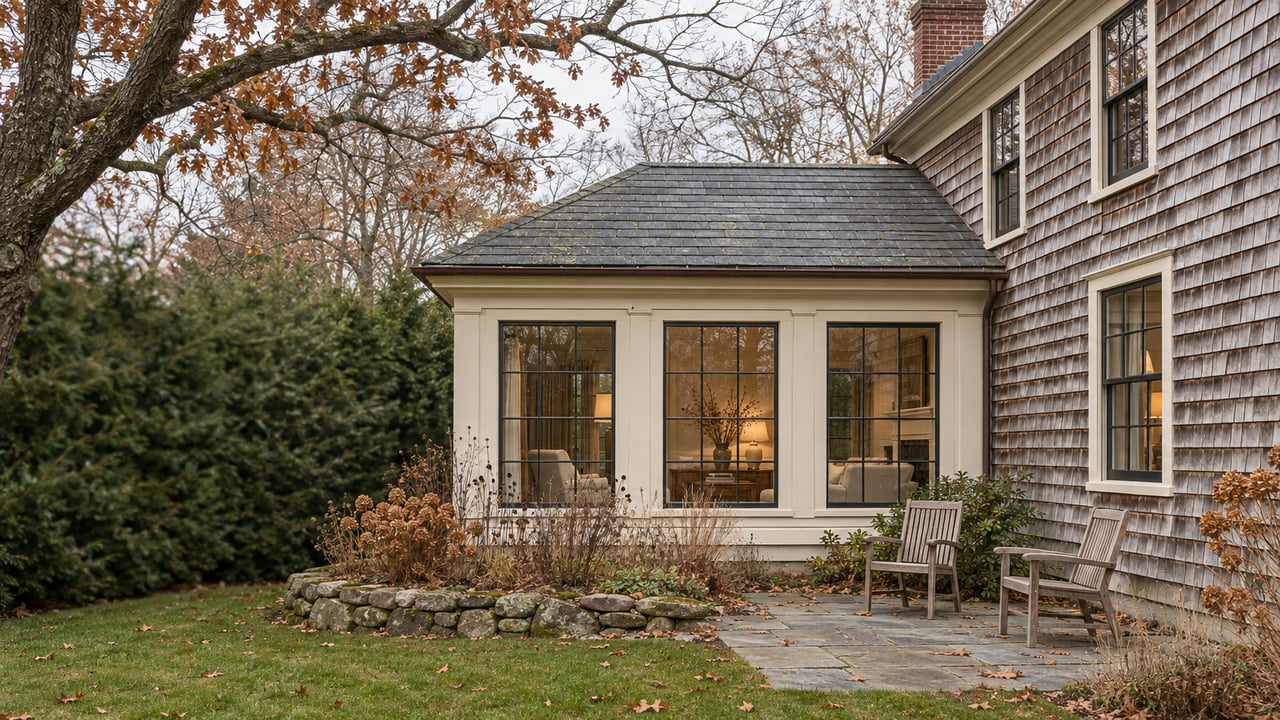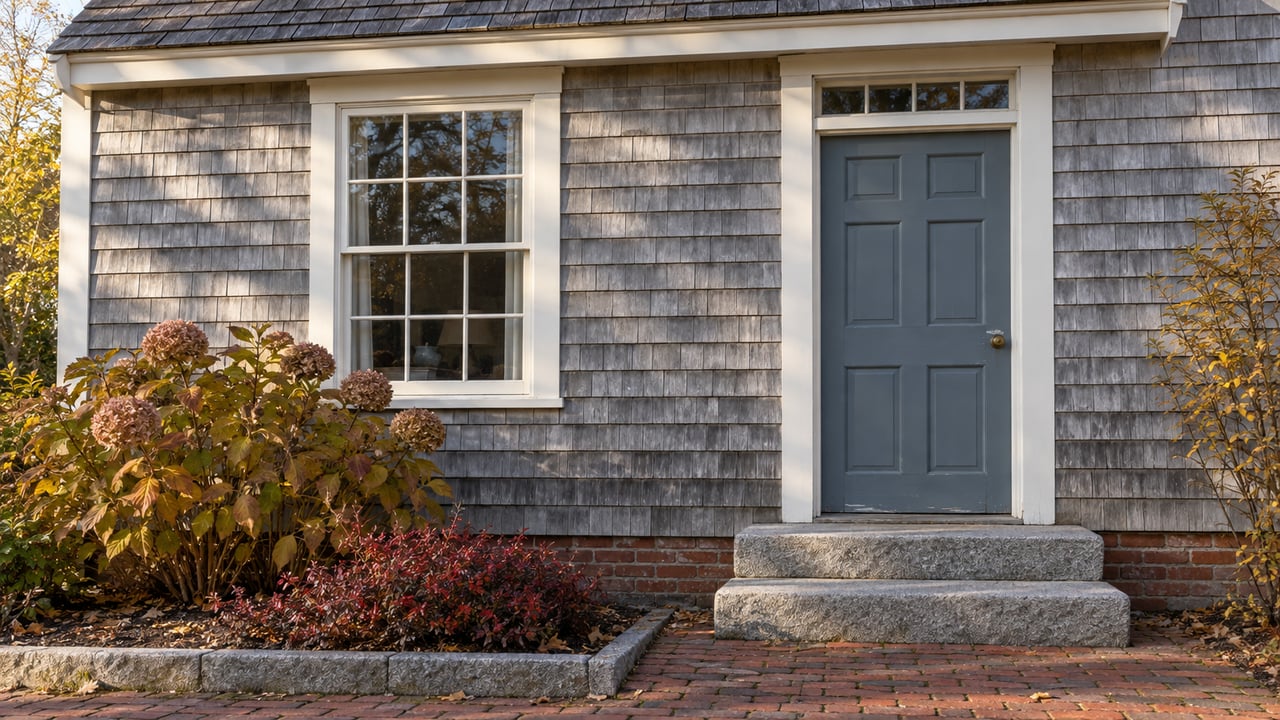
Two houses on the same Provincetown street are each assessed at $1,000,000 and taxed at the same rate. In the assessor's FY2027 illustration, one owes $3,506.09 and the other owes $6,160. The difference comes from the exemption.
Second-home buyers comparing Provincetown with other seasonal markets usually ask about the rate. The rate is low. The Massachusetts Department of Revenue lists Provincetown's FY2027 residential rate at $6.16 per $1,000. The town's exemption materials discuss qualifying dates and a filing deadline.
Dates and the residential exemption
Provincetown's residential exemption removes a fixed dollar amount of assessed value before the rate applies. The town's Residential Exemption FAQ discusses legal domicile as of January 1, 2025, for FY2026. Its Expanded Residential Exemption instructions for FY2027 ask about ownership and year-round leases as of January 1, 2026. Other requirements may apply.
The town had the power to widen the gap and chose not to use it
The Affordable Homes Act of 2024 created a seasonal communities designation for vacation towns on the Cape, the Islands, and in the Berkshires. Among other tools, it lets those towns raise the residential exemption from 35 percent to as much as 50 percent of average residential value. The state's Seasonal Communities regulations took effect February 27, 2026. The higher exemption is meant to favor year-round owners, and because the calculation is revenue neutral within the residential class, a higher exemption means a higher rate for everyone who doesn't qualify.
For two years in a row, Provincetown has left it at 35 percent.
At the August 25, 2025 classification hearing, the Provincetown Independent reported that the Select Board voted 3 to 1 to keep 35 percent for FY2026. Austin Miller wanted 50 percent, either immediately or phased in over two or three years. Jay Coburn, CEO of the Community Development Partnership, argued for the increase. "Ask any second-home owner what they pay here in Provincetown versus what they pay in suburban Boston, Connecticut, New Jersey, or New York — this is a deal," he said. Officers of the Provincetown Part-Time Resident Taxpayers Association spoke against it. PPRTA president Pat Miller proposed that homes assessed above the town average should not qualify for the exemption at all.
On August 24, 2026, the FY2027 hearing came out the same way, with a wider margin. According to the Select Board minutes, Chief Assessor Scott Fahle and Deputy Assessor Carol Bergen presented the Board of Assessors' recommendation, and public comment asked that the exemption stay at 35 percent. Leslie Sandberg moved, John Golden seconded, and the board voted 5-0 for a residential factor of 1, no split rate, a 35 percent residential exemption, and no small-business exemption.
The amount at stake is small. Fahle told the Independent that 35 percent was worth a $2,556 deduction at the FY2026 rate, and that 50 percent would have been worth $3,651. For a non-resident owner, the larger exemption would have meant a somewhat higher rate, not a different kind of tax bill.
What the gap looks like in FY2027
The exemption is a fixed amount of value rather than a percentage of each home's own assessment. For expanded-exemption parcels, it is limited by a floor that requires the owner to pay at least 10 percent of the original tax. For FY2026 the town divided $5,160,782,728 of residential value by 4,332 parcels, which gave an average of $1,191,316, and exempted 35 percent of it, or $416,961. That average includes vacant parcels. The assessor's FY2027 illustration uses a $430,830 exemption at the $6.16 rate:
| FY2027, assessor's illustration | With exemption | No exemption |
|---|---|---|
| Assessed value | $1,000,000 | $1,000,000 |
| Exemption | $430,830 | $0 |
| Taxable value | $569,170 | $1,000,000 |
| Tax | $3,506.09 | $6,160.00 |
The exemption also explains why Provincetown's residential rate is higher than its commercial rate. The DOR lists FY2027 commercial, industrial and personal property at $5.71 and residential at $6.16. The town's FAQ attributes the difference to the value removed by the exemption, which a higher residential rate has to make up.
The expanded exemption and its use
The exemption isn't limited to owners who live in the house. Since a February 2018 expansion, it has also covered some residential parcels rented year-round. Chapter 297 of the Acts of 2024, approved January 1, 2025, extended this to as many as four units on a multi-unit parcel, with a floor that keeps the owner paying at least 10 percent of the original tax. Miller noted in the Independent that Provincetown and Truro are the only towns on Cape Cod that let year-round landlords claim the exemption based on their tenants' residency.
Few owners use it. Fahle told the Independent that the town has more than 200 privately owned rental units on its rental certificate records, but only 28 owners claimed the expanded exemption last year, and 21 had applied as of February 2026.
Lease to Locals, the town's paid bridge
The town also pays owners directly to switch to year-round leasing. On February 9, 2026, the Select Board extended Lease to Locals for a third year at an expected cost of $533,192, for a three-year total of $1,641,532. All of it comes from the town's rooms tax on hotel and short-term rental bookings. The Independent reported that 52 properties housing 79 people have been leased through the program, with an average initial incentive of $9,998, and that about $100,000 of the third year is set aside for 10 new owners. Placemate runs the program, and town staff are adding lease language for tenants who move into the 65 Province Post apartments.
Select Board members have said the program is not permanent. According to the Provincetown Independent, Sandberg called it "a bridge program." Town Manager Alex Morse said spending $600,000 a year indefinitely is not sustainable. Miller described Lease to Locals as "a bridge to that long-term option of getting the subsidy through the residential tax exemption."
Frequently asked questions
Does a second-home owner pay a higher rate than a year-round owner? No. Both pay the same rate, $6.16 per $1,000 in FY2027. The difference is that a qualifying owner subtracts the exemption amount from assessed value before the rate applies.
Is the exemption percentage set permanently? No. The Select Board sets it every year at the August classification hearing. In 2025, two members said they wanted to revisit an increase later.
This post is general information, not legal, tax or financial advice. Confirm how these rules apply to your property with the Provincetown Assessors' office and your own tax and legal advisors.
Hanneman Gonzales works with second-home buyers and sellers. Contact Us for a Confidential Consultation.